
From scattered data to information you can trust.
ETL, distributed architectures, and data governance — the discipline that makes everything else, AI included, defensible.
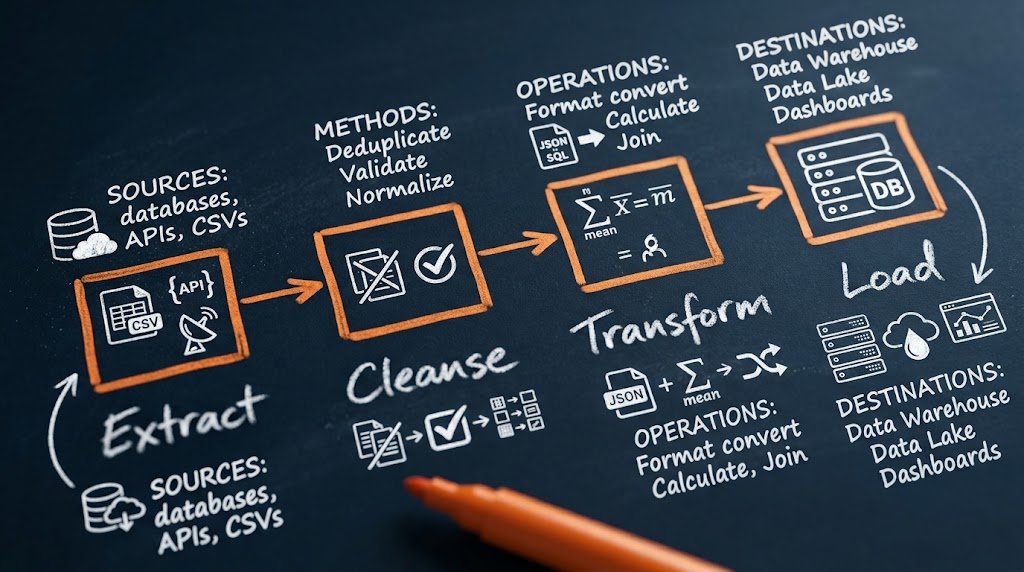
Before you can analyze it, you have to be able to trust it.
Integration & ETL
We consolidate data scattered across multiple sources and formats into a single, documented, repeatable process.
Architecture at scale
From one-off ETL to distributed clusters (Hadoop/HDFS, PySpark) when volume outgrows what traditional tools can process.
Quality & traceability
Every transformation is documented — we can explain where a figure came from, not just show it.
Data is the stage almost no one audits. We start there.
Most of the AI problems that get expensive later don't start in the model — they start in the data feeding it. That's why we treat integration and ETL as an engineering discipline with its own standards, not as an unimportant middle step. Every pipeline we build stays documented so that, months later, anyone can explain where a figure came from and why it was transformed that way.
See the full flowReal projects where this has already been put to the test.
Hadoop/HDFS + PySpark Cluster
A data volume that exceeded what traditional tools could process efficiently.
Distributed processing architecture validated; exact production impact pending confirmation with the specific client project that put it into production.
Large-Scale Accounting Data ETL for a Logistics Company
A logistics company had years of accounting and financial information scattered across multiple sources, with no unified process to consolidate or make use of it.
Significant time and money savings for the company, by eliminating manual, scattered processing of accounting information.
SIAT — MinTIC Technical Audit System
MinTIC needed to audit and oversee ICT projects and systems at a national scale, with technical information scattered across multiple agencies.
More than 750 accumulated technical audits across the team's different roles on the project.
SIBI — Enterprise System
BI LTDA needed its own enterprise system for its operations and IT infrastructure.
In operation since 2011; current functional scope and usage metrics pending confirmation with the client.